
1913 Ottoman coup d'état
CUP raid on Sublime Porte forced government change.

Collectif · Public domain
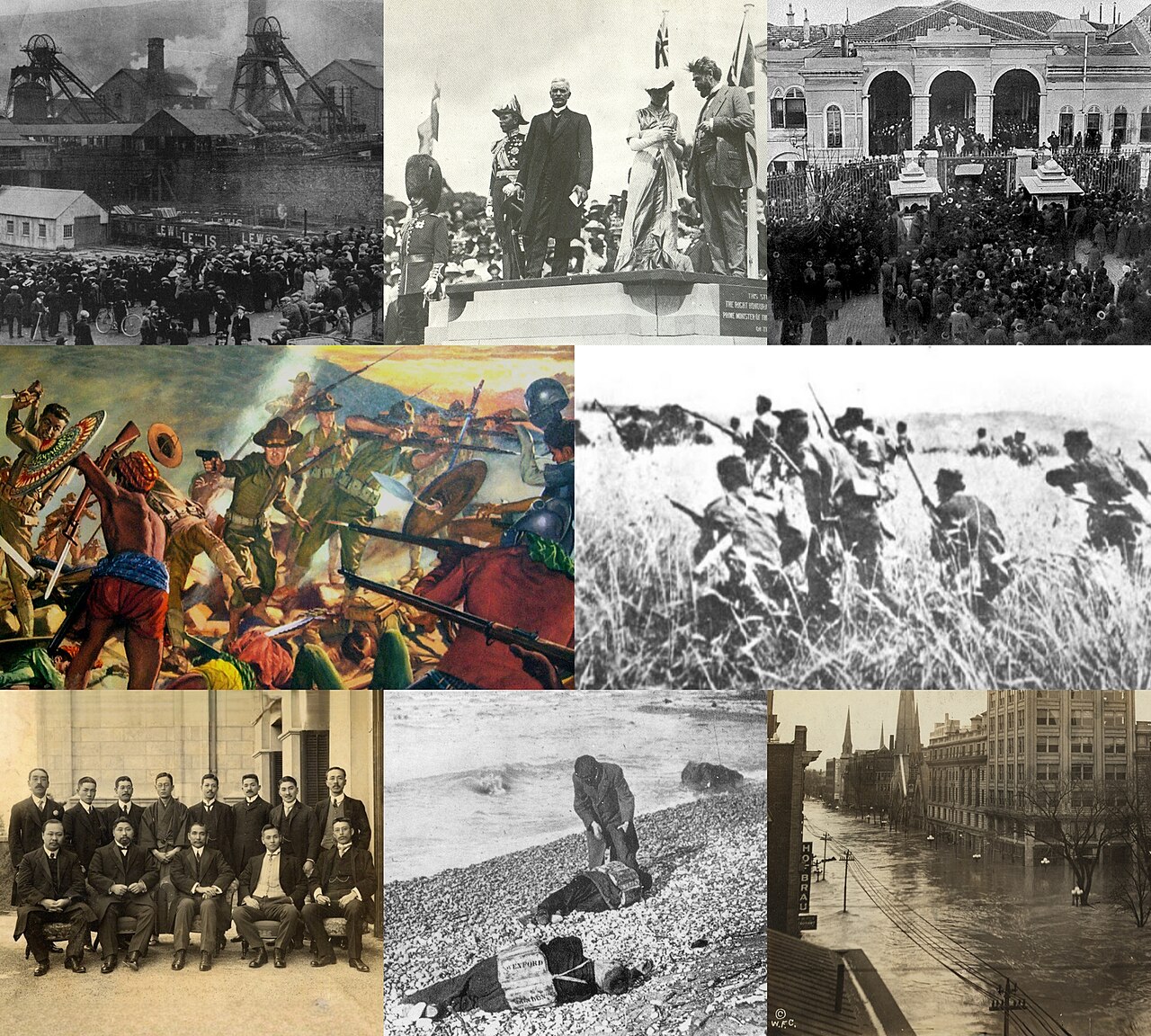
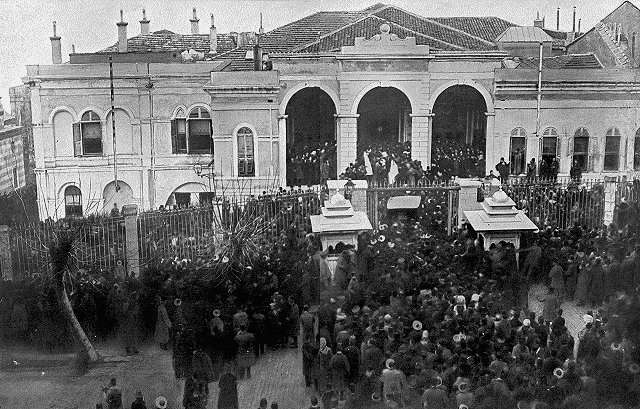
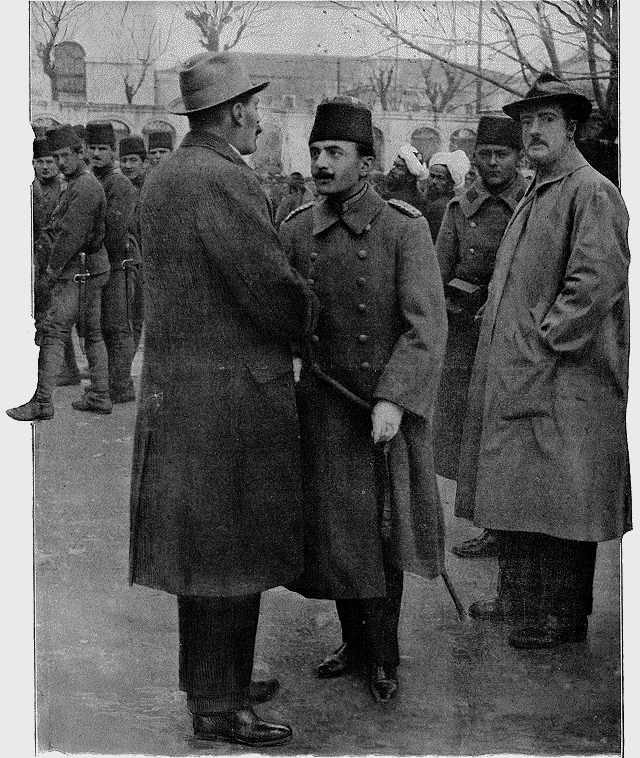
The 1913 Ottoman coup d'état, also known as the Raid on the Sublime Porte, was a coup d'état carried out in the Ottoman Empire by a number of Committee of Union and Progress (CUP) members led by Ismail Enver Bey and Mehmed Talât Bey. The group made a surprise raid on the central Ottoman government buildings, the Sublime Porte, on 23 January 1913. The coup occurred in the context of toxic partisanship between the CUP and the Freedom and Accord Party, including a fraudulent April 1912 general election benefiting the CUP and a coup against them in July 1912. The immediate pretext was the CUP's fear that the government would concede to a demand by the Great Powers that the town of Adrianople (Edirne) be handed over to Bulgaria after the disastrous results of the First Balkan War.
- date
- 23 January 1913
- location
- Constantinople, Ottoman Empire
- perpetrators
- Committee of Union and Progress (CUP) members led by Ismail Enver Bey and Mehmed Talât Bey
- target
- Sublime Porte (central Ottoman government buildings)
- outcome
- Grand Vizier Kâmil Pasha forced to resign; Minister of War Nazım Pasha killed; government led by the 'Three Pashas' (Enver, Talât, Cemal Pasha)
Lore & Background
The coup followed a period of intense political conflict. In the April 1912 general elections, known as the 'Election of Clubs,' the CUP won 269 of 275 seats amid widespread electoral fraud and violence against opposition candidates. The Freedom and Accord Party, angered by the loss, sought extra-legal methods to regain power, and the Savior Officers, a group of military officers partisan to Freedom and Accord, succeeded in forcing Grand Vizier Mehmed Said Pasha to resign in July 1912. A non-partisan 'Great Cabinet' under Ahmed Muhtar Pasha then dissolved the Chamber of Deputies, but the outbreak of the First Balkan War in October 1912 led to his resignation and the appointment of Kâmil Pasha, an ardent anti-Unionist.
Reader's Guide
The 1913 Ottoman coup d'état marked a decisive turning point in Ottoman politics. After the coup, opposition parties were subject to heavy repression. The new government led by Mahmud Şevket Pasha with Unionist support withdrew the Ottoman Empire from the London Peace Conference and resumed the war against the Balkan states to recover Edirne, but to no avail. Following Mahmud Şevket Pasha's assassination in June 1913, the CUP took full control of the empire, and opposition leaders were arrested or exiled to Europe. Ottoman victory in the Second Balkan War and the recovery of Edirne moved the CUP closer to Germany ahead of World War I. The coup effectively ended multi-party politics in the Ottoman Empire and consolidated the power of the Three Pashas, whose policies would shape the empire's final years.
Did You Know?
- The coup is also known as the Raid on the Sublime Porte (Turkish: Bâb-ı Âlî Baskını).
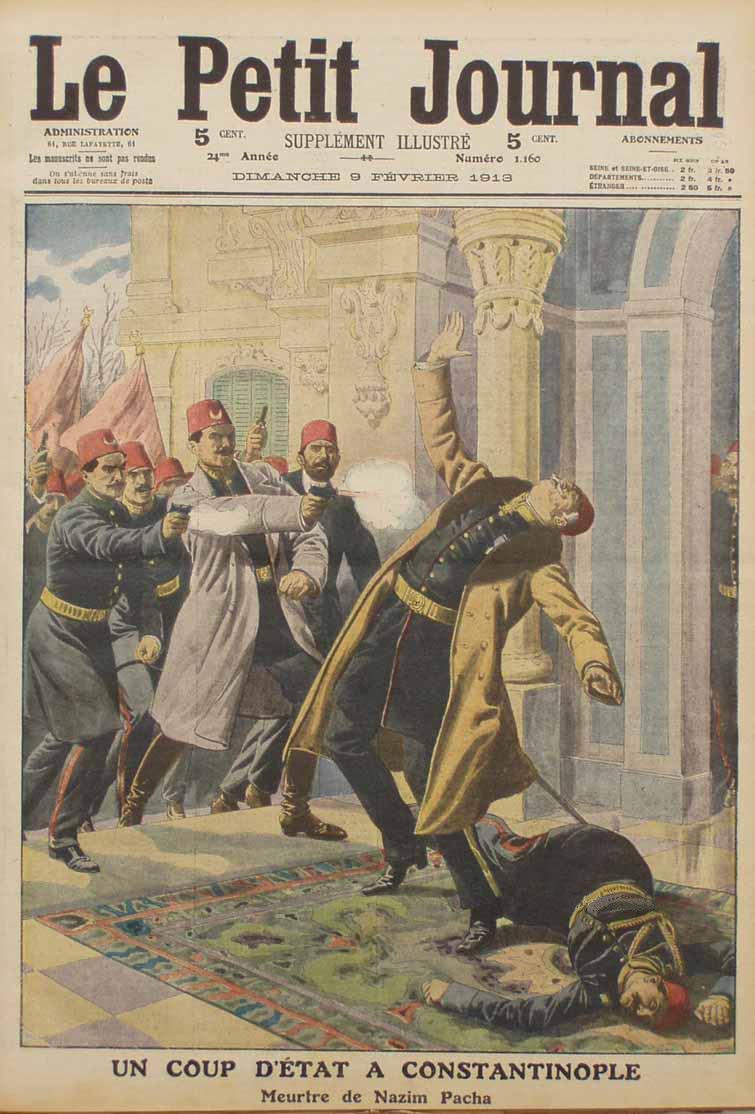
- The Minister of War, Nazım Pasha, was killed during the raid.
- The coup occurred after the CUP feared the government would cede Adrianople (Edirne) to Bulgaria following the First Balkan War.
- After the coup, the government was led by the triumvirate known as the 'Three Pashas': Enver, Talât, and Cemal Pasha.
The Poisoned Ballot Box
The political landscape leading to the January 1913 coup was defined by escalating electoral violence and institutional manipulation. When the Freedom and Accord Party emerged in late 1911, attracting seventy deputies within weeks of its founding, the CUP recognized a genuine threat to its parliamentary dominance. In response, the ruling party pushed Sultan Mehmed V to dissolve the Chamber and call early elections for April 1912. What followed became infamous as the "Election of Clubs," a campaign in which opposition candidates were physically beaten with sticks and clubs, while ballot stuffing, secret vote counting, early polling, and redistricting ensured a CUP landslide of 269 out of 275 seats. The Freedom and Accord managed only six deputies. This manufactured victory did not end the conflict; instead, it radicalized the opposition. A faction of military officers, the Savior Officers, organized as an armed group and aligned themselves with the Freedom and Accord. Through public declarations and pressure on the Military Council, they forced the resignation of Grand Vizier Mehmed Said Pasha and his CUP-backed cabinet in July 1912, setting the stage for further political instability.
The Shadow of Adrianople
The immediate trigger for the coup was not merely a power struggle but a crisis of national identity. Following the catastrophic Ottoman defeat in the First Balkan War, the Great Powers pressed for the cession of Adrianople—known in Turkish as Edirne, a former Ottoman capital—to Bulgaria. Kâmil Pasha, who had received Sultan Mehmed V's authorization in October 1912 to form a government, engaged in diplomatic negotiations with Bulgaria that appeared to move toward accepting this territorial loss. For the CUP leadership and the broader Turkish populace, the prospect of surrendering a historic capital was intolerable. The CUP's inner circle, which may have already been planning a return to power, seized upon this fear as their proximate justification. The combination of military humiliation, the perceived betrayal of national territory, and the CUP's desire to reclaim political control created a volatile mixture that made a violent seizure of the government buildings almost inevitable in the minds of Enver, Talât, and their allies.
The Raid and the Three Pashas
On the morning of 23 January 1913, a group of CUP members led by Ismail Enver Bey and Mehmed Talât Bey executed a surprise armed assault on the Sublime Porte, the seat of the Ottoman central government. The operation was swift and lethal. Minister of War Nazım Pasha was killed during the raid, and Grand Vizier Kâmil Pasha was compelled to resign under duress. In the aftermath, political power consolidated in the hands of a triumvirate—Enver, Talât, and Cemal Pasha—collectively known as the "Three Pashas." Their seizure of control marked a decisive shift from parliamentary governance to authoritarian rule by a military-political clique. The CUP's victory in this single night of violence effectively ended the brief period of political pluralism that had followed the 1908 revolution, replacing it with a regime that would dominate Ottoman politics for the next several years and ultimately steer the empire toward the catastrophic decisions of World War I.
Repression, War, and the Road to Germany
The months following the coup revealed the full authoritarian character of the new CUP-dominated regime. Opposition parties faced heavy repression, and after the assassination of Grand Vizier Mahmud Şevket Pasha in June 1913, the CUP assumed unmediated control of the empire. Opposition leaders were either arrested or exiled to Europe, eliminating any meaningful domestic political challenge. On the foreign policy front, the government under Mahmud Şevket Pasha, backed by Unionist support, withdrew the Ottoman Empire from the London Peace Conference and resumed hostilities against the Balkan states in an attempt to recover Edirne and the broader region of Rumelia. Although the initial campaign failed, the subsequent Ottoman victory in the Second Balkan War and the eventual recovery of Edirne—achieved despite pressure from the Entente powers—significantly altered the empire's strategic orientation. This military success, combined with the CUP's growing distrust of Western powers, moved the Ottoman leadership decisively closer to Germany in the years immediately preceding World War I.
Gallery
More in Rebellions in the Ottoman Empire 1-24
Spotted an error? Know more?
This is a living reference — every entry is fact-audited, and reader corrections feed straight into our audit queue. Suggest an edit · See this site's audit record