
Atçalı Kel Mehmet revolt
Zeybek who briefly ruled Aydın while remaining loyal to the Padishah.

Erdalkara at Turkish Wikipedia · Public domain
The Atçalı Kel Mehmet revolt was a local uprising led by a Zeybek named Atçalı Kel Mehmet Efe (c. 1780–1830) against Ottoman authority in the Aydın region. The revolt, which lasted from 1829 to 1830 during the reign of Mahmud II, briefly established local control while maintaining nominal loyalty to the Padishah.
- born
- c. 1780
- died
- 1830
- field
- Revolt leader
- nationality
- Ottoman (Turkish)
- known_for
- Leading a local revolt in Aydın (1829–1830)
Lore & Background
Atçalı Kel Mehmet was born around 1780 to a Turkish peasant family in Atça. According to legend, as a young man he witnessed a fight between a tiny, sick dog and three healthy, powerful dogs. After being beaten for a long time, the tiny dog ended up in an alley with no exit, then fought back with its final energy and defeated its opponents. Inspired, Mehmet saw an analogy between the dog's situation and the relationship between the Ottoman reign and Anatolian peasants, and decided to become an outlaw in the mountains.
Reader's Guide
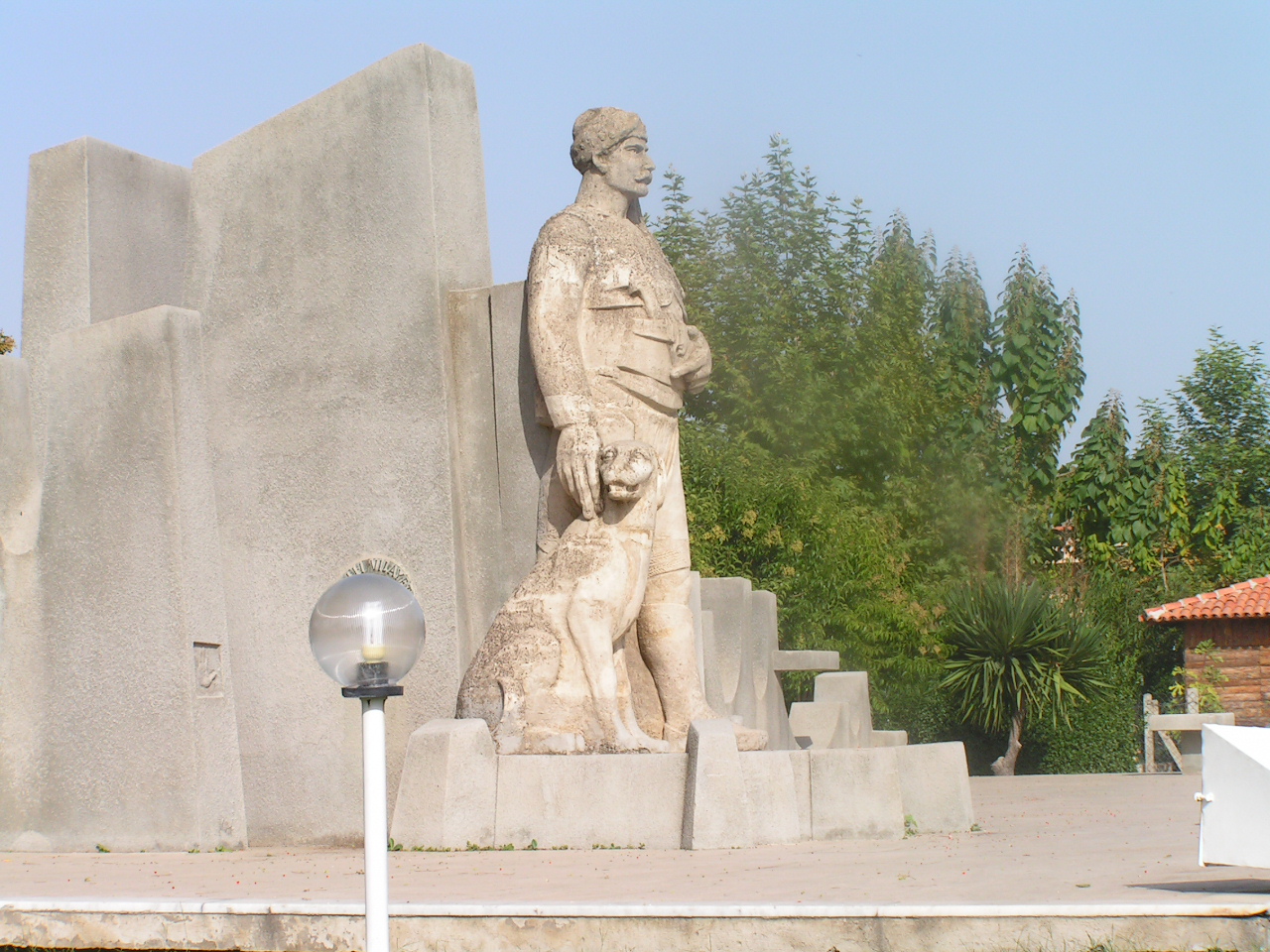
In 1829, Mehmet started a revolt in Kuyucak, a town near Atça, demanding tax cuts, fair laws, and shorter military service. He quickly gained popularity among peasants weary of heavy taxes and endless military service from the declining empire's continuous wars. After controlling Aydın, people from neighboring regions also accepted his authority. Although the revolt was against the Ottoman Empire, he stayed loyal to the Padishah, collecting taxes in the Padishah's name and sending the money to the capital. On coins he issued, he wrote: 'Vali-i Vilayet Hademe-i Devlet Atçalı Kel Mehmet' (Head of the Province, Servant of the State, from Atça; the Bald Mehmet). The Ottoman Empire, struggling with ongoing revolts, sent forces to regain control, and Atçalı was killed in combat in 1830. His courage made him a prominent regional figure, influencing other Efes such as Yoruk Ali Efe and Demirci Mehmet Efe. A statue of him stands in Atça.
Did You Know?
- Atçalı Kel Mehmet was inspired to become an outlaw after watching a tiny sick dog defeat three healthy dogs.
- He collected taxes in the name of the Padishah and sent the money to the capital.
- His revolt lasted only about one year, from 1829 to 1830.
Origins and the Legend of Awakening
Born around 1780 into a modest Turkish peasant household in the village of Atça, Kel Mehmet's path to rebellion was, according to local tradition, set in motion by a single, harrowing sight. As an unremarkable young man, he watched a small, ailing dog locked in a desperate struggle against three larger, healthier opponents. The tiny animal was battered for what felt like an eternity before it was driven into a narrow alley with no way out. Yet in that corner, with nothing left but its last reserves of strength, the dog turned and overpowered all three attackers. Mehmet saw in that scene a perfect mirror of the relationship between the Ottoman state and the common farmers of Anatolia: a small, exhausted people pushed to the wall by an overwhelming power, yet still capable of a final, fierce resistance. That single image crystallized his resolve, and he left the village for the mountains to live as a free outlaw, an Efe of the Zeybek tradition.
The Revolt and a Paradox of Loyal Governance
In 1829, from the small town of Kuyucak just outside Atça, Kel Mehmet launched an open challenge to Ottoman authority. His platform was deceptively simple: reduce the crushing tax burden, establish fairer legal practices, and shorten the seemingly endless military conscription that had drained Anatolian villages through the empire's perpetual wars. The exhausted rural population, long weary of a declining state's demands, rallied to his cause with remarkable speed. Before long he held effective control over the Aydın region, and inhabitants of neighboring areas voluntarily acknowledged his authority. What made his rule distinctive was a paradox: though he had risen against the imperial administration, he never questioned the legitimacy of the Sultan himself. He levied taxes explicitly in the Padishah's name and forwarded the revenue to the capital. On the coins he issued, he inscribed the title 'Head of the Province, Servant of the State, from Atça; the Bald Mehmet'—a declaration that he governed as a loyal officer, not a rebel.
The Sultan's Response and a Fatal End
Kel Mehmet's brief period of autonomous rule could not survive the political realities of the era. The Ottoman Empire under Mahmud II was already stretched thin by a cascade of uprisings across its territories, and the Sultan had no appetite for a self-styled provincial governor in Aydın, however loyal his rhetoric. The central government dispatched military forces to reassert direct control over the region. In 1830, Kel Mehmet met the Sultan's troops in open combat and was killed in the fighting. His death marked the end of what had been, in practical terms, roughly a year of local self-governance in Aydın. The episode underscored a recurring pattern of the period: even the most popular and locally rooted leaders, however careful to frame their authority as service to the throne, could not escape the empire's insistence on centralized command. The revolt that had begun with a peasant's demand for fairer taxes ended, as so many did, with the state's army restoring the status quo.
Enduring Legacy in the Zeybek Tradition
Although his control of Aydın lasted barely a year, Kel Mehmet's name has endured far beyond the boundaries of his lifetime. His courage and the sheer audacity of a peasant-born Efe challenging the machinery of empire made him a towering symbol in the collective memory of the region. His example left a visible imprint on the next generation of Zeybek leaders; figures such as Yoruk Ali Efe and Demirci Mehmet Efe drew inspiration from his story and carried forward the tradition of mountain resistance that he embodied. In his hometown of Atça, a statue stands in his honor, a permanent reminder to the community of the young man who once watched a small dog fight three larger ones and decided that the same spirit could be turned against an empire. He remains one of the most recognizable names in the Zeybek and Efe tradition, a figure whose legend continues to be retold in the villages of western Anatolia.
Gallery
More in Rebellions in the Ottoman Empire 1-24
Spotted an error? Know more?
This is a living reference — every entry is fact-audited, and reader corrections feed straight into our audit queue. Suggest an edit · See this site's audit record