
Arab Revolt
Hashemite-led uprising against Ottoman rule in World War I.

Godmadeus · CC0
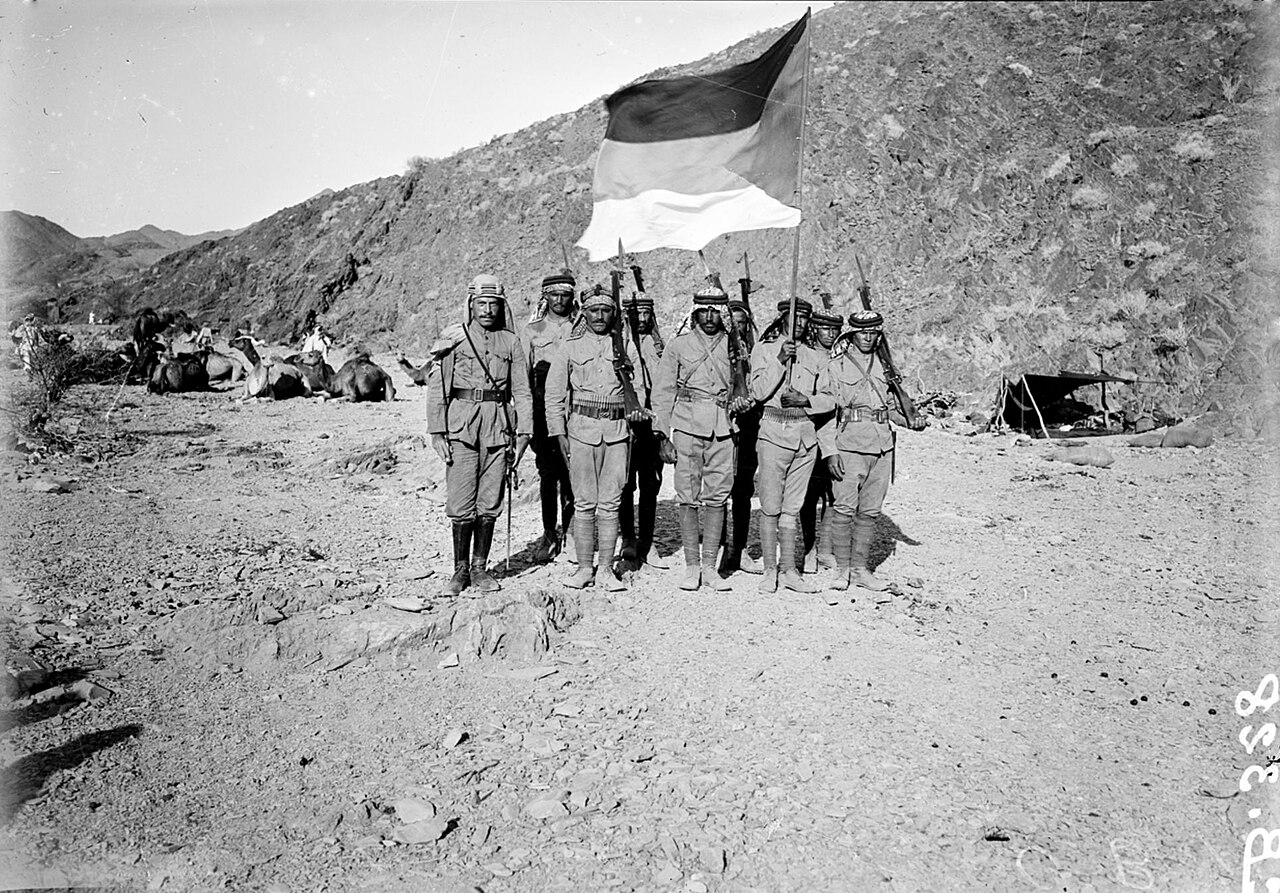
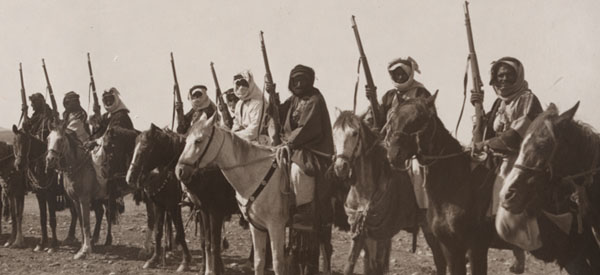
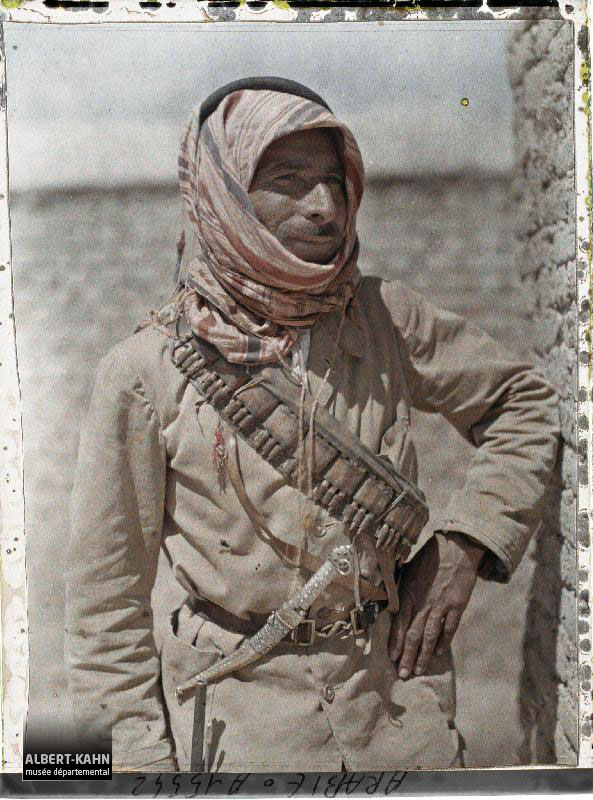
The Arab Revolt (Arabic: الثورة العربية al-Thawra al-'Arabiyya), also known as the Great Arab Revolt, was an armed uprising by the Hashemite-led Arabs of the Hejaz against the Ottoman Empire during the Middle Eastern theatre of World War I. Initiated on 10 June 1916 at Mecca, the revolt aimed to establish an independent and unified Arab state from Aleppo to Aden, as promised by the British in the McMahon–Hussein Correspondence. The revolt is historically significant for its role in the partition of the Ottoman Empire and the creation of modern Middle Eastern states, though its representative character and military impact remain disputed.
- opposing_force
- Ottoman Hejaz Expeditionary Force (including various regiments and gendarmerie units)
Lore & Background
The revolt was rooted in the rise of Arab nationalism and discontent with the centralizing policies of the Young Turks' Committee of Union and Progress, which emphasized Turkish dominance. Arab intellectuals and politicians, meeting at the First Arab Congress in Paris in 1913, demanded greater autonomy, Arabic-language education, and local service for Arab conscripts. The McMahon–Hussein Correspondence (1915–1916) secured British backing for the revolt in exchange for Arab cooperation against the Ottoman Empire.
Reader's Guide
The Arab Revolt's significance lies in its contribution to the collapse of Ottoman rule in the Middle East and the subsequent creation of League of Nations mandates under British and French control. However, its legacy is contested: historians note that the revolt was primarily a Hashemite dynastic project, not a general Arab uprising, and that most Arabs remained loyal to the Ottoman authorities. The revolt's military role was limited and supporting, with British and French forces leading the liberation. The short-lived Arab Kingdom of Syria, proclaimed in Damascus in 1918 under Faisal I, was soon dissolved by European powers. The revolt's name and representative character remain subjects of scholarly debate, with terms like 'Hijaz Revolt' or 'Sharifian Revolt' used to emphasize its localized and dynastic nature.
Did You Know?
- The revolt was officially initiated at Mecca on 10 June 1916.
- Most Arabs in Ottoman territories stayed loyal to the local Ottoman authorities and did not join the revolt.
- The Arab Revolt army did not play a decisive military role; liberation was led primarily by British and French forces.
- The designation 'Arab Revolt' is disputed; some historians use 'Hijaz Revolt' or 'Sharifian Revolt' to reflect its Hashemite-centered nature.
Roots of Arab Nationalism and Reform
Arab nationalism took shape well before the twentieth century, with its intellectual roots stretching back to at least 1821 and concentrated in the Mashriq, the Arab territories east of Egypt, particularly across the Levant. Before the First World War, Arab political movements were largely moderate in tone. Their aspirations were reformist rather than separatist: they sought greater autonomy within the empire, the use of Arabic in schools, and a restructuring of peacetime conscription so that Arab soldiers would serve near their own communities rather than being scattered across distant Ottoman garrisons. The Young Turk Revolution of 3 July 1908 reshaped the political landscape. The Committee of Union and Progress, which dominated the new parliament, pursued a programme blending pan-Islamism, Ottomanism, and pan-Turkism. At its core, however, the CUP was a Turkish nationalist project that sought to position Turks as the dominant group within the empire, a stance that alienated Arab leaders and pushed them toward their own nationalistic thinking. In 1913, Mashriqi intellectuals and politicians gathered in Paris for the First Arab Congress, where they formalised demands for Arabic-language education, regional military service, and at least three Arab ministers in the Ottoman cabinet.
The Uprising and the Road to Damascus
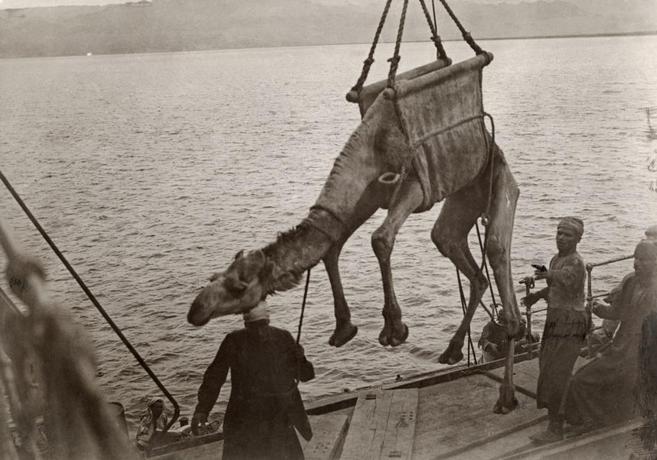
The armed phase of the revolt was formally launched at Mecca on 10 June 1916, following the McMahon–Hussein Correspondence in which British official Henry McMahon pledged recognition of an independent, unified Arab state spanning from Aleppo to Aden. Sharif Hussein bin Ali and his Hashemite relatives raised the Sharifian Army, operating with the logistical and strategic backing of the British Egyptian Expeditionary Force. Over the following two years the rebels drove Ottoman garrisons out of large swaths of the Hejaz and Transjordan. The military contribution of Arab forces, however, was far smaller than either side had anticipated. Estimates place the number of Arab regulars fighting alongside General Allenby's campaign at roughly five thousand, with some sources suggesting as few as two to three and a half thousand. Faisal and his father had hoped to attract one hundred thousand Arab troops, yet the mass desertions predicted by the British Arab Bureau in Cairo never occurred; the majority of Arab officers remained loyal to the Ottoman command until the war's end. By 1918 the rebels had seized Damascus and proclaimed the Arab Kingdom of Syria under Faisal I, a short-lived monarchy that would soon be swept away by the postwar settlement.
A Disputed Name and a Contested Legacy
The very label Arab Revolt has long been contested among historians. Aviel Roshwald argues the term is misleading because the uprising was fundamentally a project of Sharif Hussein and his Hashemite followers in the Hejaz, not a broad-based rebellion by the empire's entire Arab population. Nuri Yeşilyurt prefers the narrower designation Hijaz Revolt, emphasising that the movement was a local reaction with British sponsorship rather than a sweeping expression of Arab or Islamic opposition to Ottoman rule. Academic literature also employs the term Sharifian Revolt to foreground the dynastic leadership of the Hashemite family. Efraim and Inari Karsh go further, questioning the grandeur of the Great Arab Revolt label altogether. They interpret the uprising principally as a Hashemite dynastic enterprise, a bid to secure political power for one family, rather than as a mass movement representative of the Arab Ottoman population as a whole. This debate over nomenclature reflects a deeper disagreement about whose story the revolt actually tells and how much agency can be attributed to the broader Arab world versus a small circle of princes and their British patrons.
Partition, Mandates, and the Limits of Liberation
The postwar settlement dismantled the vision of a single Arab state from Aleppo to Aden. The Arab-majority territories of the former Ottoman Empire were carved into a patchwork of League of Nations mandates, jointly administered by Britain and France. Meanwhile the Ottoman mainland in Anatolia fell under a joint military occupation by the victorious Allied powers, a situation that was gradually reversed by the Turkish War of Independence, which ultimately established the modern Republic of Turkey. Critically, the revolt's popular base was far narrower than its name implies. Most Arabs living in Ottoman territories remained loyal to their local authorities and neither joined nor supported Hussein bin Ali's uprising. The Arab Revolt army did not play a decisive military role in the broader war; the liberation of the region was carried out primarily by British and French forces, with the Hashemite fighters serving a more limited supporting function. The large desertions from the Ottoman army that the British Arab Bureau had anticipated never materialised, and many Arabs only joined the revolt sporadically, often when fighting reached their own region.
Gallery

More in Rebellions in the Ottoman Empire 1-24
Spotted an error? Know more?
This is a living reference — every entry is fact-audited, and reader corrections feed straight into our audit queue. Suggest an edit · See this site's audit record